



Inside a small Taiwan city, a blueprint for India’s chip dreams
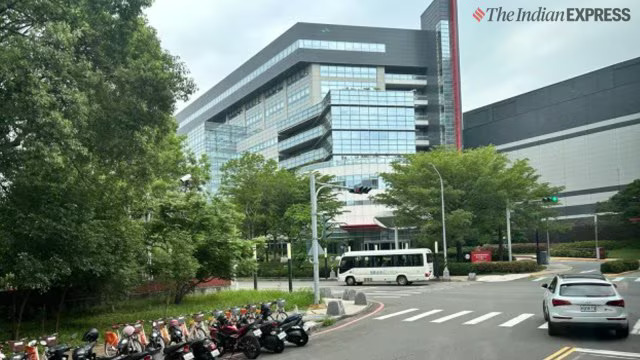
Taiwan’s Hsinchu Science Park offers crucial lessons for India as it builds Dholera into a global semiconductor manufacturing hub.
Once known for tea farms and rural landscapes, Hsinchu—located about 80 kilometres from Taipei—has transformed into the heart of Taiwan’s semiconductor industry. Today, it stands as a global symbol of chipmaking excellence and a vital pillar of Taiwan’s economy.
Hsinchu is home to the renowned Hsinchu Science Park, which hosts some of the world’s most influential semiconductor companies, including Taiwan Semiconductor Manufacturing Company (TSMC), MediaTek, and United Microelectronics Corporation (UMC). Together, companies in the park contribute nearly 6–8% of Taiwan’s GDP and over 12% of its exports.
Taiwan produces more than 90% of the world’s most advanced semiconductor chips, and Hsinchu plays a central role in this dominance. The city’s success is rooted in long-term government planning, early technology transfers, and the creation of a strong research ecosystem led by institutions like the Industrial Technology Research Institute (ITRI).
India’s upcoming semiconductor hub at Dholera in Gujarat draws many parallels with Hsinchu’s early days. Envisioned as a high-tech city, Dholera is central to India’s ambition of becoming self-reliant in semiconductor manufacturing.
Major projects such as the Tata–PSMC semiconductor fabrication plant and supporting facilities by CG Power are expected to catalyse Dholera’s growth. However, experts note that beyond factories, success will depend on creating a strong social ecosystem—housing, education, healthcare, and quality of life— much like Hsinchu achieved over four decades.
While Hsinchu evolved into a largely self-sufficient city with universities, residential zones, and integrated utilities, Dholera currently remains sparsely populated. Infrastructure such as highways, power networks, and an upcoming international airport are in place, but the next phase will require attracting talent and building vibrant communities.
As India pushes forward with its semiconductor mission, Hsinchu stands as a powerful blueprint—demonstrating that sustained policy support, private-sector leadership, and human-centric urban development are essential to building a globally competitive chip manufacturing ecosystem.
 Whatsapp